
You love making music. But somewhere along the way, your body stopped cooperating when it matters most. If this feels familiar, you’re not alone—and you’re not dealing with a lack of confidence or discipline.
There’s a pattern here.
What if it’s a pattern in your body—one that can be understood, interrupted, and changed? This workshop isn't about "hacks"; it's about seeing clearly what's going on and discovering a different way to respond.

You might recognize yourself in this:
You hit a high note you know you can sing… but your jaw tightens and the sound feels controlled.
Your hands start to shake right before you begin, even though you were fine a minute ago.
In rehearsal, you’re expressive and free… but in performance, everything feels tight and small.
You leave a performance replaying everything that went wrong, even if others thought it went well.
In this workshop, you’ll discover:
- Why musicians are especially prone to anxiety, perfectionism, and burnout.
- The hidden anxiety–tension loop and how it shows up in your body.
- A simple way to interrupt the loop in real time.
- How small shifts in coordination can immediately affect breath, sound, and steadiness.
- A new way to relate to mistakes—without the mental crash afterward.
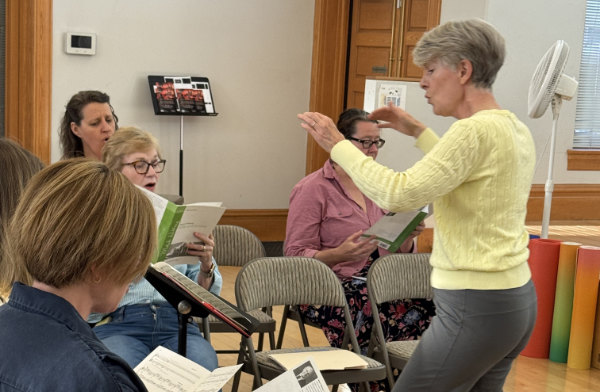
What this looks like in real life:
• The Singer notices her jaw releasing mid-phrase—and suddenly the sound opens without pushing.
• The Violinist interrupts the urge to “try harder” before a difficult passage—and plays it with more clarity.
• The Student recovers quickly after a mistake and continues the performance without shutting down.
A Different Approach
This work is grounded in the Alexander Technique—a practical way of learning how to interrupt unhelpful patterns and allow more ease, coordination, and responsiveness. Not by forcing change, but by changing the conditions that create the problem in the first place.